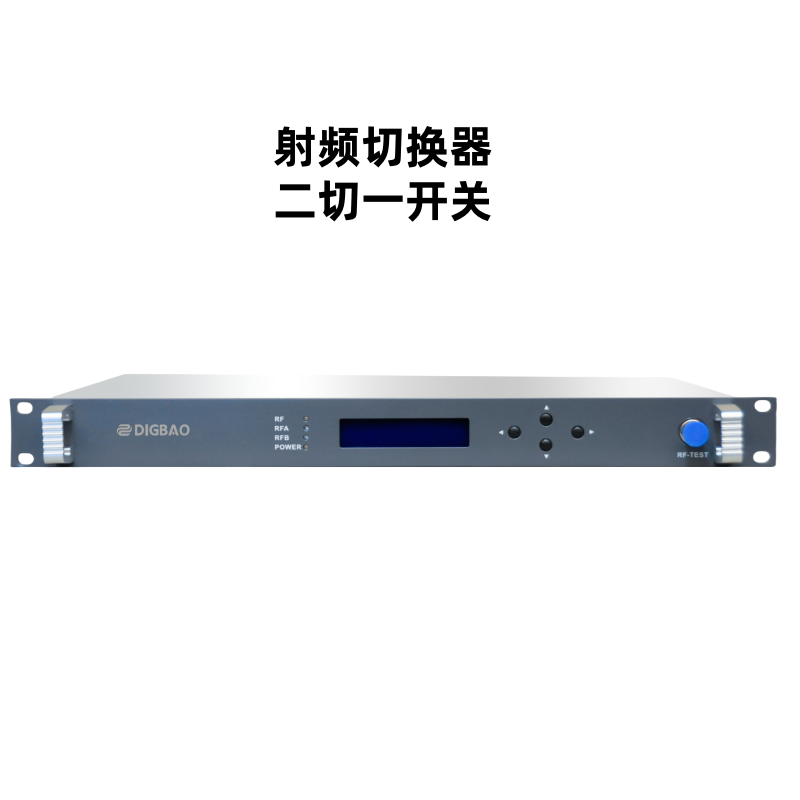
RF Switch (2×1) SW-1003RF
1、Product Overview
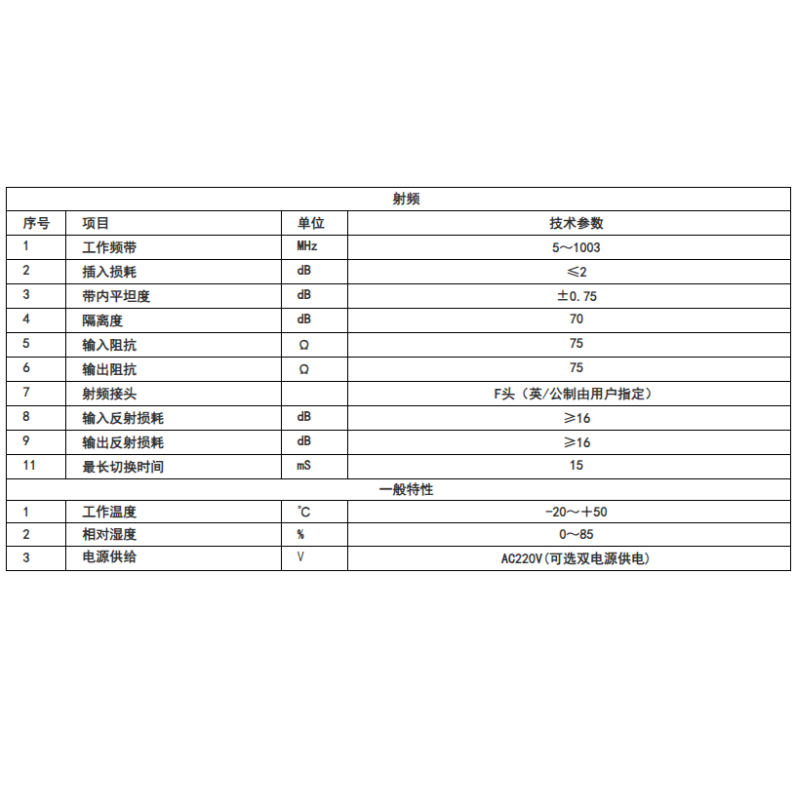
SW-1003RF, 1GHz, channel isolation ≥ 70dB, insertion loss ≤ 2dB, hot-swappable dual power supply module, supports IP network management transponder.
RF switch is widely used in CATV analog/digital TV headends and sub-headend equipment rooms to improve the reliability and security of network operation. Once the device detects that the main path level is below the warning threshold (minimum allowable RF level), the RF switch automatically switches the network from the main path to the backup path. Imported high-performance switching components and a built-in embedded automatic monitoring system ensure excellent performance and network management functions. Manual and automatic switching between main and backup signals is supported. In automatic mode, the RF switch monitors RF input signals in real time. If the main path signal quality falls below the user-set switching threshold, the switch immediately selects the backup path as output. In manual mode, the user selects the RF channel.
2、Features
* Supports network management transponder.
* Optional hot backup dual power supply module.
* Frequency range: 5 ~ 1003MHz
* Channel isolation ≥ 70dB
* Insertion loss ≤ 2dB
* Maximum switching time ≤ 15ms
* Operating temperature: -20℃ ~ +55℃
* Operating voltage: AC 150 ~ 265V (50Hz)
* 19” 1U: 483mm(L) × 345mm(W) × 44mm(H)
Options:
1、SW-1003RF: single power supply, reserved for network management;
2、SW-1003RF: dual power supply, reserved for network management.
3、Application Functions
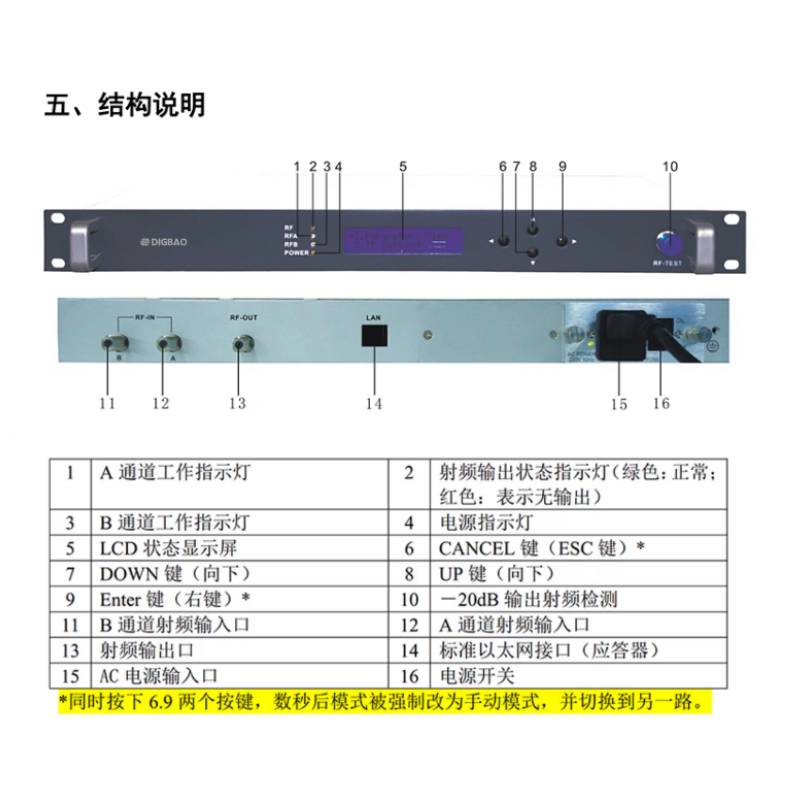
1. The rear panel of the RF switch provides two channels labeled A and B, with RF IN1 and RF IN2 inputs and one RF OUT output. By default, RF IN_1 is the main signal input and RF IN_2 is the backup input.
2. In automatic switching mode for single-frequency headend RF signals, with channel A as main and B as backup: when the level difference between the two paths reaches 10dB and channel A is 10dB lower than B, the unit switches to B automatically. When channel A is restored to the same level as B, it switches back to A automatically.
3. When channel A carries 30 frequencies and channel B carries one frequency matching one of A’s frequencies: if channel A is completely interrupted in automatic mode, the switch moves to B. When A recovers, it automatically returns to main path A.
4. For multi-channel transmission with identical frequencies on A and B: if the total power level difference reaches 10dB (threshold adjustable), and the composite level of A is abnormal, the switch moves to B. After A is repaired, the unit remains on B unless manually switched back. The better signal path is treated as the main path automatically.
5. For multi-frequency input, switching is based on total composite power, not individual frequencies. In automatic mode, the switch continuously compares the two inputs and outputs to the better quality path. In manual mode, the user selects the channel.
6. Under LAN network management: automatic/manual switching can be configured. Multiple units can be assigned different IP addresses. The NMS monitors working status, signal level, and current active path, and allows manual switching between A and B.
7. Front-panel manual switching between A and B is supported. In automatic mode, switching occurs when signal degradation exceeds the set threshold.
8. The unit retains operating status after power failure. RF ports support bypass mode when powered off, defaulting to the backup path (main/backup bypass can be customized).
9. The switch can be ordered with single or dual power supply (single power supply is standard).
4、Specifications